Buying advice
Drone for beginners: What to look for and which one fits
Updated on 7 min read
Written with AI: This text was written with the help of artificial intelligence. Technical data and legal information are based on the linked manufacturer and authority sources. Learn more
AdvertisingThis page contains affiliate links (marked with *). If you buy through them, we earn a commission. The price stays the same for you. As an Amazon Associate we earn from qualifying purchases. How we make money
All models at a glance
DJI Flip
- Weight
- ~249 g
- EU class
- C0
- Flight time
- 31 min
- Range
- 8 km
- Sensor
- 1/1.3″
- Video
- 4K/100fps
Price at the retailerView on Amazon*DJI Mini 4 Pro
- Weight
- ~249 g
- EU class
- C0
- Flight time
- 34 min
- Range
- 10 km
- Sensor
- 1/1.3″ CMOS
- Video
- 4K/100fps
Price at the retailerView on Amazon*DJI Mini 5 Pro
- Weight
- 249.9 g
- EU class
- C0
- Flight time
- 36 min
- Range
- 10 km
- Sensor
- 1″ CMOS
- Video
- 4K/120fps
Price at the retailerView on Amazon*DJI Neo 2
- Weight
- 151 g
- EU class
- C0
- Flight time
- 19 min
- Range
- 6 km
- Sensor
- 1/2″
- Video
- 4K/100fps
Price at the retailerView on Amazon*
| Spec | DJI Flip | DJI Mini 4 Pro | DJI Mini 5 Pro | DJI Neo 2 |
|---|---|---|---|---|
| Weight | ~249 g | ~249 g | 249.9 g | 151 g |
| EU class | C0 | C0 | C0 | C0 |
| Flight time | 31 min | 34 min | 36 min | 19 min |
| Range | 8 km | 10 km | 10 km | 6 km |
| Sensor | 1/1.3″ | 1/1.3″ CMOS | 1″ CMOS | 1/2″ |
| Video | 4K/100fps | 4K/100fps | 4K/120fps | 4K/100fps |
| Price | at the retailer | at the retailer | at the retailer | at the retailer |
| View on Amazon* | View on Amazon* | View on Amazon* | View on Amazon* |
Technical data according to manufacturer specifications (as of 11/11/2026). Values marked with ~ are uncertain. We have not tested these devices ourselves unless stated otherwise.
Quick verdict
You don’t need a professional drone to get started. More important than the camera are features that forgive mistakes: class C0, GPS, a return-to-home function and good obstacle sensing. All four models here meet the first three points, but there are clear differences in obstacle sensing. Still unsure? The drone finder narrows down the choice with 5 questions.
We have not flown the drones ourselves. All data comes from DJI’s spec sheets and FAQs, linked below under sources.
The models compared
| Feature | DJI Flip | DJI Mini 4 Pro | DJI Mini 5 Pro | DJI Neo 2 |
|---|---|---|---|---|
| Weight | under 249 g | under 249 g | 249.9 g | 151 g |
| EU class | C0 | C0 | C0 (with standard battery) | C0 |
| Satellite navigation | GPS, Galileo, BeiDou | GPS, Galileo, BeiDou | GPS, Galileo, BeiDou | GPS, Galileo, BeiDou |
| Obstacle sensing | front + below | omnidirectional + infrared below | omnidirectional + LiDAR at the front | omnidirectional (monocular) + LiDAR at the front |
| Propeller guards | foldable, all round | not mentioned in the spec sheet | not mentioned in the spec sheet | yes |
| Flight time | 31 min | 34 min | 36 min | approx. 19 min (approx. 17 min with guards) |
| Max. wind resistance | 10.7 m/s | 10.7 m/s | 12 m/s | 10.7 m/s |
The models in detail
DJI Flip: the easiest start
The Flip has foldable full propeller guards. If it touches a wall, a branch or a hand, the propellers are shielded. According to DJI, it takes off from your palm, even without a remote controller, and subject tracking keeps you in frame. DJI writes that even people without drone experience can get started quickly.
The catch: it only senses obstacles to the front (3D infrared) and below. If you fly sideways or backwards, you have to watch out yourself. If you control it only via the app, DJI limits it to 30 m altitude and 50 m distance. For bigger flights you need a remote controller.
- Pros: propeller guards, hand launch, 31 minutes of flight time, 1/1.3-inch sensor
- Cons: no obstacle sensing to the sides or rear
- Who it’s for: beginners who mainly want to film themselves, family and friends
- Don’t buy if: you plan wide landscape flights where you also steer the drone sideways and backwards
DJI Mini 4 Pro: full camera drone with all-round sensor protection
The Mini 4 Pro senses obstacles in all directions via cameras, plus a 3D infrared sensor on the underside. If the connection to the remote controller drops, it triggers a failsafe return according to the DJI FAQ. DJI advises setting the return altitude in cities higher than the tallest building.
With 34 minutes of flight time, 48 MP and 4K at up to 100 fps, it is a drone that won’t hold you back even after the first few weeks.
- Pros: omnidirectional obstacle sensing, long flight time, mature model
- Cons: no propeller guards mentioned in the spec sheet, smaller sensor than the Mini 5 Pro
- Who it’s for: beginners looking for a camera drone for travel and landscapes
- Don’t buy if: you mainly want to fly near people or in tight spaces
View DJI Mini 4 Pro on Amazon*
DJI Mini 5 Pro: the best features
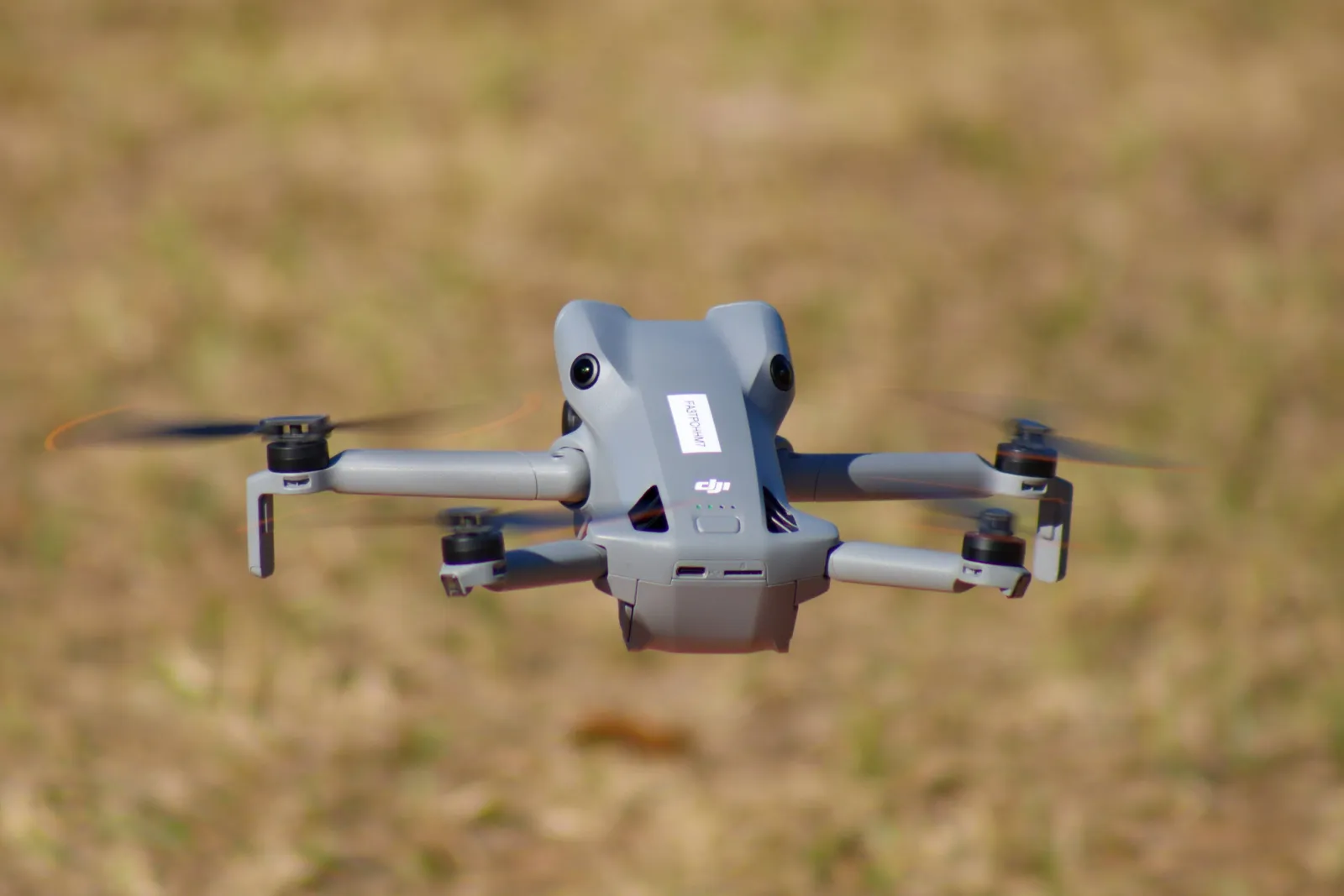
The Mini 5 Pro has the most comprehensive sensors on this list: omnidirectional vision sensors, plus LiDAR at the front. According to DJI, the LiDAR also detects obstacles such as buildings on the return route and helps at night when the cameras are no longer enough. At 12 m/s, it also withstands the most wind according to the spec sheet.
Careful: with the Plus battery from the Fly More Combo Plus, it is a C1 drone. Then you need the A1/A3 drone licence. To get started, take the version with the standard battery.
- Pros: best obstacle sensing, return to home with LiDAR, 1-inch sensor, 36 minutes of flight time
- Cons: no longer C0 with the Plus battery
- Who it’s for: beginners who want the best camera and safety features right away
- Don’t buy if: you first want to find out whether flying drones will become your hobby
View DJI Mini 5 Pro on Amazon*
DJI Neo 2: small, light, no remote controller
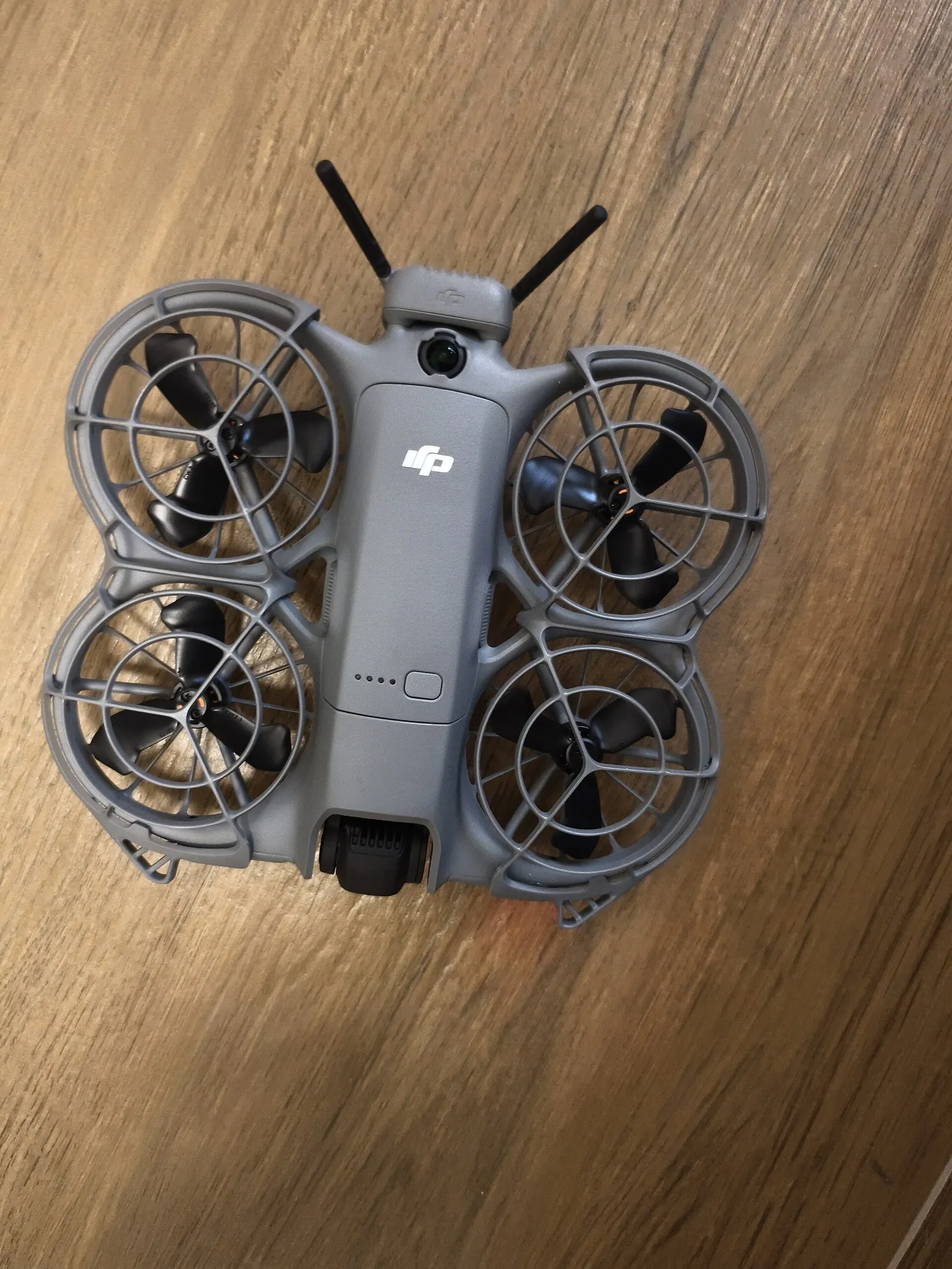
The Neo 2 weighs 151 g and has propeller guards. It takes off from your palm, lands on it again and can be controlled by gestures or the app. It senses obstacles in all directions via a monocular vision system, plus LiDAR at the front. Via the app, according to DJI, it flies no higher than 60 m.
To fly it with a remote controller, you also need the DJI Neo 2 Digital Transmitter. At about 19 minutes, its flight time is the shortest in this comparison.
- Pros: very light, propeller guards, omnidirectional vision system, simple control
- Cons: short flight time, small sensor, remote controller only with an add-on module
- Who it’s for: beginners who mainly take selfie clips and short shots
- Don’t buy if: you want to learn to fly the classic way with a remote controller
What beginners should look for when buying
Weight and class C0
Under 250 g with class C0, you don’t need a drone licence. You still have to register and get insurance. What exactly applies is explained under Drone under 250 g: which rules apply?. Watch out for larger batteries in bundles: they can change the class.
GPS
GPS holds the drone in place when you let go of the sticks and is the basis for the return-to-home function. According to DJI, all four models use GPS, Galileo and BeiDou. Without satellite navigation, a drone can drift with the wind. So check the spec sheet to see whether GPS is on board.
Return-to-home function
The return-to-home function (RTH) brings the drone back to the take-off point, for example if the connection is lost. The return altitude is important: DJI advises setting it higher than the surrounding buildings. The fewer obstacle sensors a drone has, the more important this setting is.
Obstacle sensing
Beginners misjudge distances mainly when flying sideways and backwards. Omnidirectional sensing is the most forgiving here. However, DJI names conditions for it, such as sufficient light and recognisable surfaces. So don’t rely on it blindly.
Spare parts and repairs
Propellers are wear parts. DJI recommends checking them before every flight for cracks, deformation and loose screws, and replacing damaged ones. Buy spare propellers at the same time. Before buying, check whether spare batteries and parts for your model are available in shops. For crash damage, DJI offers its own protection plan, see DJI Care Refresh.
Overview
| Criterion | What to look for |
|---|---|
| Class C0 | no licence, careful with Plus batteries |
| GPS | stable hovering, prerequisite for RTH |
| Return-to-home function | adjustable return altitude, ideally with obstacle sensing |
| Obstacle sensing | the more directions, the better |
| Propeller guards | useful for tight spaces and flights close to people |
| Spare parts | propellers, batteries and repairs available |
Frequently asked questions
Do I need a drone licence as a beginner?
Not for C0 drones under 250 g. However, you have to register as an operator and you need liability insurance.
Should I start with a cheap drone?
A drone without GPS does not hold its position by itself and is therefore harder to fly. It can still make sense for practising control. How best to practise is explained under Learning to fly a drone.
Which drone is the safest for beginners?
That depends on what you mean by safe. The Flip protects with its propeller guards on contact, but only senses obstacles to the front and below. The Mini 5 Pro and the Mini 4 Pro sense obstacles in all directions, but DJI does not mention propeller guards in the spec sheet. The direct comparison is in Mini 4 Pro vs. Flip.
Which other drones under 250 g are there?
You can find an overview under Drone under 250 g.
Sources
- DJI: Flip – Technische Daten, retrieved on 12 November 2026
- DJI: Flip – FAQ (hand launch, app control, propellers), retrieved on 12 November 2026
- DJI: Mini 4 Pro – Technische Daten, retrieved on 12 November 2026
- DJI: Mini 4 Pro – FAQ (return on signal loss, propellers), retrieved on 12 November 2026
- DJI: Mini 5 Pro – Technische Daten, retrieved on 12 November 2026
- DJI: Mini 5 Pro – FAQ (return to home with LiDAR), retrieved on 12 November 2026
- DJI: Neo 2 – Technische Daten, retrieved on 12 November 2026
- DJI: Neo 2 – FAQ (control, app altitude limit, beginners), retrieved on 12 November 2026