Buying advice
Drone for kids: What to look for when buying
Updated on 5 min read
Written with AI: This text was written with the help of artificial intelligence. Technical data and legal information are based on the linked manufacturer and authority sources. Learn more
First clarify: what is your child allowed to fly?
From what age your child may fly on their own, who registers and who gets insurance is a legal question. It depends on the age and the drone. Everything about it is under Drones and children: from what age can you fly?. This page is only about buying.
Which type of drone fits?
| Drone type | Suitable for | What to look for |
|---|---|---|
| Indoor mini drone | first flights in the living room or a hall | propeller guards, spare propellers, spare batteries |
| Toy drone | younger children, short play flights | labelled as a toy, manufacturer’s age rating |
| Camera drone with propeller guards | teenagers, flights together with parents | manufacturer’s age recommendation, registration if it has a camera |
Durability: crashes are part of it
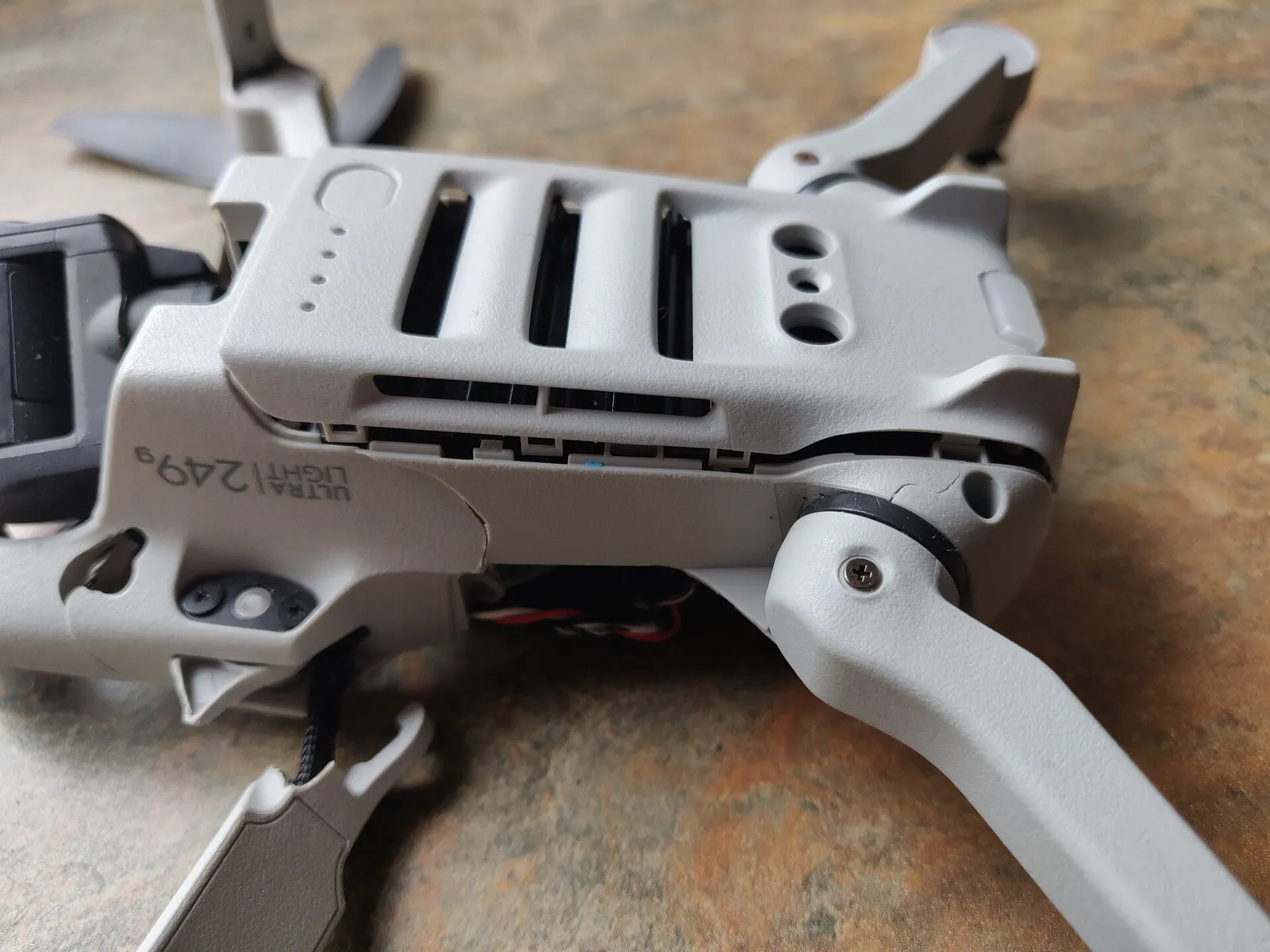
Children learn by trying things out. Along the way, a drone will sometimes end up against a wall, in a tree or on the ground. So when buying, look for:
- Enclosed propeller guards: A frame around the propellers absorbs many knocks before the propellers or motors take damage.
- Spare parts: Before buying, check whether spare propellers and spare batteries are available for exactly this model. Without replacements, the drone is often useless after the first broken propeller.
- Low weight: The lighter the drone, the less damage a collision does, both to the drone and to your furniture.
For the Flip, for example, DJI advises checking the propellers for cracks and deformation before every flight and replacing damaged ones. That applies to every drone and is a good habit children can learn early.
Propeller guards: important for fingers and furniture
Spinning propellers can injure fingers and catch hair. For children, propeller guards are therefore the most important feature.
Check whether the guard covers the propellers all round or only at the sides. A full guard also shields better from above and below. Retrofit guards for other models are under Propeller guards.
Propeller guards cost flight time: according to DJI, the DJI Neo 2 drops from about 19 to about 17 minutes. For children, the trade-off is still worth it.
Indoor mini drones: practising in the living room
Small indoor drones are meant for flying in rooms. They let children learn the controls without weather and wind getting in the way. Check whether the drone holds its position by itself. Without this function it is more demanding to fly, but that is also good training for the controls.
When buying, check:
- flight time per battery and whether several batteries are included
- whether a protective frame covers the propellers all round
- whether spare propellers are included
- whether there is a beginner mode with reduced speed
- whether the drone has a camera, because that affects registration
If your child wants to move towards FPV later, you can find small FPV drones for indoors under Tiny Whoop.
Toy drones: what to look for
Toy drones are meant for younger children and are labelled as toys. The age rating is on the packaging and in the manufacturer’s information. Stick to it. Whether a drone legally counts as a toy depends on this labelling, details under Drones and children.
Before buying, you should check:
- age recommendation and labelling as a toy
- whether propeller guards are permanently fitted
- how the battery is charged and whether a charger is included
- whether spare parts are available
- whether a camera is built in
We will only add specific toy models once we have checked the manufacturer data.
Camera drones: for teenagers and flights together
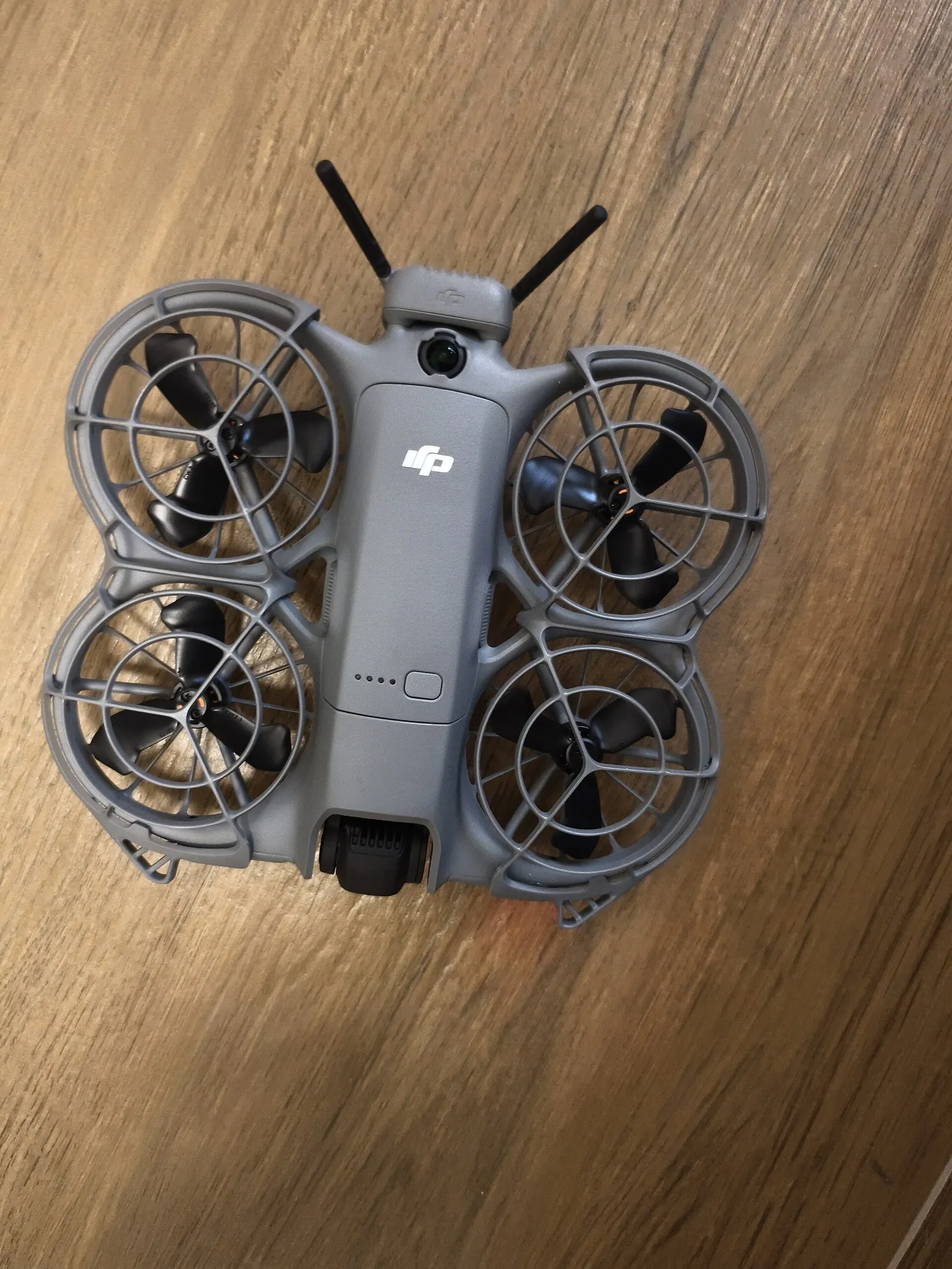
Camera drones such as the DJI Flip and the DJI Neo 2 have propeller guards and take off from your hand. However, DJI writes in the FAQs of both models that they are intended for users aged 16 and over. For younger children they are therefore not a toy but a drone you fly together.
| Feature | DJI Flip | DJI Neo 2 |
|---|---|---|
| Propeller guards | foldable, all round | yes |
| Weight | under 249 g | 151 g |
| Control | palm, app, voice, remote controller | palm, gestures, app, voice (via app), remote controller (with add-on module) |
| Flying indoors | not mentioned in the FAQ | indoors and outdoors according to DJI |
| DJI age recommendation | 16 and over | 16 and over |
According to DJI, the voice control of both models only understands English and Mandarin. Which model suits beginners better is compared under Drone for beginners.
Frequently asked questions
From what age does a drone make sense?
For toy drones, the manufacturer’s age rating applies. DJI recommends its camera drones such as the Flip and Neo 2 from age 16. What applies legally is under Drones and children.
Which drone is suitable for practising indoors?
A small, light indoor drone with a full protective frame. With it, your child learns the controls without wind. How to practise step by step is explained under Learning to fly a drone.
Does a drone for kids need a camera?
No. Without a camera the drone is simpler, and depending on the drone, obligations such as registration no longer apply. If your child wants to film, plan the flights together.
Sources
- DJI: Flip – FAQ (age recommendation 16+, hand launch, propellers), retrieved on 12 November 2026
- DJI: Flip – Produktseite (foldable full propeller guards), retrieved on 12 November 2026
- DJI: Neo 2 – FAQ (age recommendation 16+, indoor and outdoor flight, gesture control), retrieved on 12 November 2026
- DJI: Neo 2 – Technische Daten (weight, flight time with propeller guards), retrieved on 12 November 2026