Drone law
Publishing Drone Photos: What Is Allowed?
Updated on 6 min read
Written with AI: This text was written with the help of artificial intelligence. Technical data and legal information are based on the linked manufacturer and authority sources. Learn more
Legal status checked on · not legal advice
No legal advice
This page explains the principles. It is not legal advice. Whether a particular photo may be published always depends on the individual case. If you want to sell drone photos or use them commercially, get advice from a lawyer.
The questions at a glance
| What is in the photo? | What it is about legally | Principle |
|---|---|---|
| Landscape without protected works | hardly any restrictions | usually unproblematic |
| Protected building or work of art | copyright, § 59 UrhG | according to the BGH, freedom of panorama does not apply to drone aerial photos |
| Identifiable people | right to one’s own image, §§ 22, 23 KUG | consent required, with exceptions |
| Identifiable people, licence plates, properties | data protection, GDPR (DSGVO) | purely private use exempt, otherwise a balancing of interests |
| Other people’s gardens and houses | § 21h LuftVO | overflight with camera without consent prohibited |
Freedom of panorama: does it apply to aerial photos?
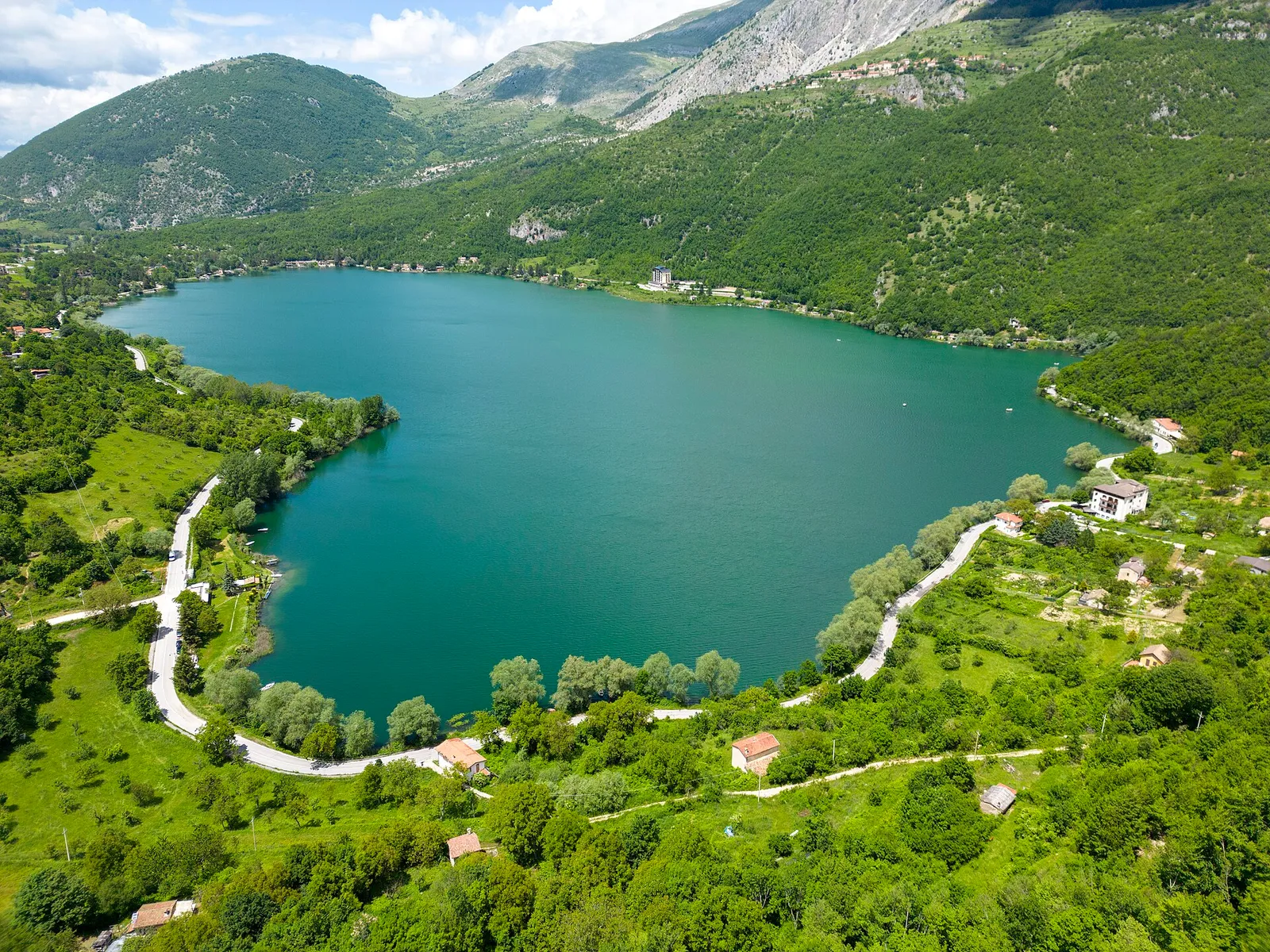
Freedom of panorama is set out in § 59 of the Copyright Act (Urheberrechtsgesetz, UrhG). It allows you to photograph and film works that are permanently located on public paths, roads or squares, and to distribute the images. For buildings, this only applies to the exterior view.
For drones, the Federal Court of Justice ruled on 23 October 2024 (case no. I ZR 67/23): aerial photos of copyright-protected works taken with a drone do not fall under freedom of panorama. The case concerned a publisher that had printed drone photos of art installations in books about spoil heaps in the Ruhr area.
The BGH weighed users’ freedom of information against the interests of the authors. According to the press release, the authors’ interest prevails for drone aerial photos in book publications.
What this means for you:
- If your drone photo shows a protected work, such as modern architecture, a sculpture or an art installation, you cannot rely on § 59 UrhG when publishing it.
- § 59 UrhG and the BGH ruling concern works, according to the BGH press release for example works of fine art including architecture. If your photo only shows nature, i.e. fields, forests or coasts, such works are not involved.
- Whether a building is protected is not always easy to tell. If in doubt, ask the rights holder or do not publish.
The press release refers to a case involving books. It does not explicitly state how courts assess other publications, such as private posts on social networks.
People in the photo: the right to one’s own image
Under § 22 of the Art Copyright Act (Kunsturhebergesetz, KUG), portraits may only be distributed or shown publicly with the consent of the person depicted. After the person’s death, you need the consent of the relatives for ten years.
§ 23 KUG lists exceptions where you do not need consent:
- Portraits from the sphere of contemporary history.
- Images in which people appear only as incidental details next to a landscape or location.
- Images of assemblies, processions and similar events in which the people took part.
- Portraits not made to order, if publication serves a higher interest of art.
These exceptions do not apply either if a legitimate interest of the person depicted is violated. A typical drone photo of a beach full of small, unidentifiable people is something different from a close-up of a person sunbathing.
Watch out with assemblies: the exception in the KUG only concerns publishing. You may never fly over assemblies of people in the open category. More under Flying over people.
Data protection: when does the GDPR apply?
The GDPR (DSGVO) protects personal data, i.e. information about an identified or identifiable person. In a drone photo, this can be faces, but also other features through which someone can be identified.
The GDPR does not apply when a private individual processes data exclusively in the course of personal or household activities (Art. 2(2)(c) GDPR). Where the line lies for publications on the internet or for commercial use cannot be stated in general terms.
The Berlin Commissioner for Data Protection advises:
- Generally only film people with their consent.
- Recordings of gardens and homes are usually prohibited without the explicit consent of those affected.
- In the balancing of interests under Art. 6(1)(f) GDPR, according to the authority, the rights of the people filmed usually prevail.
Other people’s property: here the problem starts with the flight
Under § 21h(3) No. 7 LuftVO, you may only fly a camera drone over other people’s residential property if the owner or authorised user has explicitly consented. The exception for drones up to 250 g only applies if they cannot make or transmit recordings. All cases are listed under No-fly zones.
What this means for your own garden and your neighbours’ is explained under Drones in the garden.
A photo from a prohibited flight does not become allowed just because you keep it private. And when publishing, data protection and personality rights come on top.
Checklist before publishing
- Was the flight allowed? Geozones, residential property, distance from people.
- Are people identifiable? Then consent or a clear exception under § 23 KUG, otherwise make them unrecognisable.
- Are licence plates, house numbers or private gardens visible? If in doubt, make them unrecognisable or leave them out.
- Does the photo show a protected building or work of art? Then, according to the BGH, freedom of panorama does not help with aerial photos.
- Was the photo taken abroad? Different rules may apply there, see Drones on holiday.
Tips for the shots themselves are under Drone photos: tips.
Frequently asked questions
Can I publish drone photos of my own house?
You may fly over your own property if no other geozone lies over it. Make sure that no neighbouring properties or people are identifiable. If your house is a copyright-protected work by an architect, copyright may also play a role.
Is it enough to pixelate faces?
It often helps, because then nobody is identifiable any more. But a person can also be identifiable by clothing, vehicle or location. Pixelating also does not make a prohibited flight allowed after the fact.
Does the BGH ruling also apply to landscape photos?
The ruling concerns copyright-protected works such as art installations and buildings. Pure nature shots without such works are not affected. For people and properties in the image, the KUG, GDPR and § 21h LuftVO still apply.
Sources
- § 59 Urheberrechtsgesetz: Werke an öffentlichen Plätzen (gesetze-im-internet.de), retrieved on 12 November 2026
- Bundesgerichtshof, Pressemitteilung Nr. 204/2024: Urheberrechtliche Unzulässigkeit von Luftbildaufnahmen mittels einer Drohne (Urteil vom 23.10.2024, I ZR 67/23), retrieved on 12 November 2026
- § 22 Kunsturhebergesetz: Recht am eigenen Bild (gesetze-im-internet.de), retrieved on 12 November 2026
- § 23 Kunsturhebergesetz: Ausnahmen (gesetze-im-internet.de), retrieved on 12 November 2026
- Verordnung (EU) 2016/679 (DSGVO), Art. 2 und Art. 4 – EUR-Lex, retrieved on 12 November 2026
- Berliner Beauftragte für Datenschutz und Informationsfreiheit: Drohnen, retrieved on 12 November 2026
- § 21h Luftverkehrs-Ordnung: Geografische Gebiete, Abs. 3 Nr. 7 Wohngrundstücke (gesetze-im-internet.de), retrieved on 12 November 2026
Changes to this page
- : Page created, information checked against UrhG, KUG, GDPR, § 21h LuftVO, the BGH press release and the Berlin data protection authority.