Accessories
Drone backpack: what a good backpack has to offer
Updated on 3 min read
Written with AI: This text was written with the help of artificial intelligence. Technical data and legal information are based on the linked manufacturer and authority sources. Learn more
Bag or backpack?
| Shoulder bag | Backpack | Hard case | |
|---|---|---|---|
| Suits | mini drones, short outings | hiking, travel, with a camera or laptop | car, larger drones, lots of accessories |
| Carrying the weight | on one shoulder | spread over both shoulders | in your hand |
| Protection | good against knocks | good against knocks | very good, also against pressure |
| Hand luggage | usually no problem | usually no problem, check dimensions | often too bulky |
Some bundles already include a bag. Check what is in the box, for example with the Fly More Combo, and see whether the bag is enough for you before you buy a separate backpack.
Criteria for a good drone backpack
- Padding and dividers. The drone needs a fixed compartment where it does not slide around. Velcro dividers you can adjust to your drone are handy if you buy a different model later.
- Room for batteries. Plan compartments for at least two to three batteries, kept apart from each other. Ideally there is a separate compartment for a fireproof battery bag.
- Controller and cables. The controller is often almost as big as the drone. Then add the charger, cables and spare propellers.
- Quick access. A side opening or a top flap saves time because you do not have to unpack everything.
- Weather protection. A rain cover or water-repellent material protects the electronics. According to DJI, the drone, controller and battery should be stored dry.
- Carrying comfort. A chest strap and hip belt help on longer walks.
- Size for hand luggage. Each airline sets its own hand luggage dimensions. Compare them with the backpack before you buy.
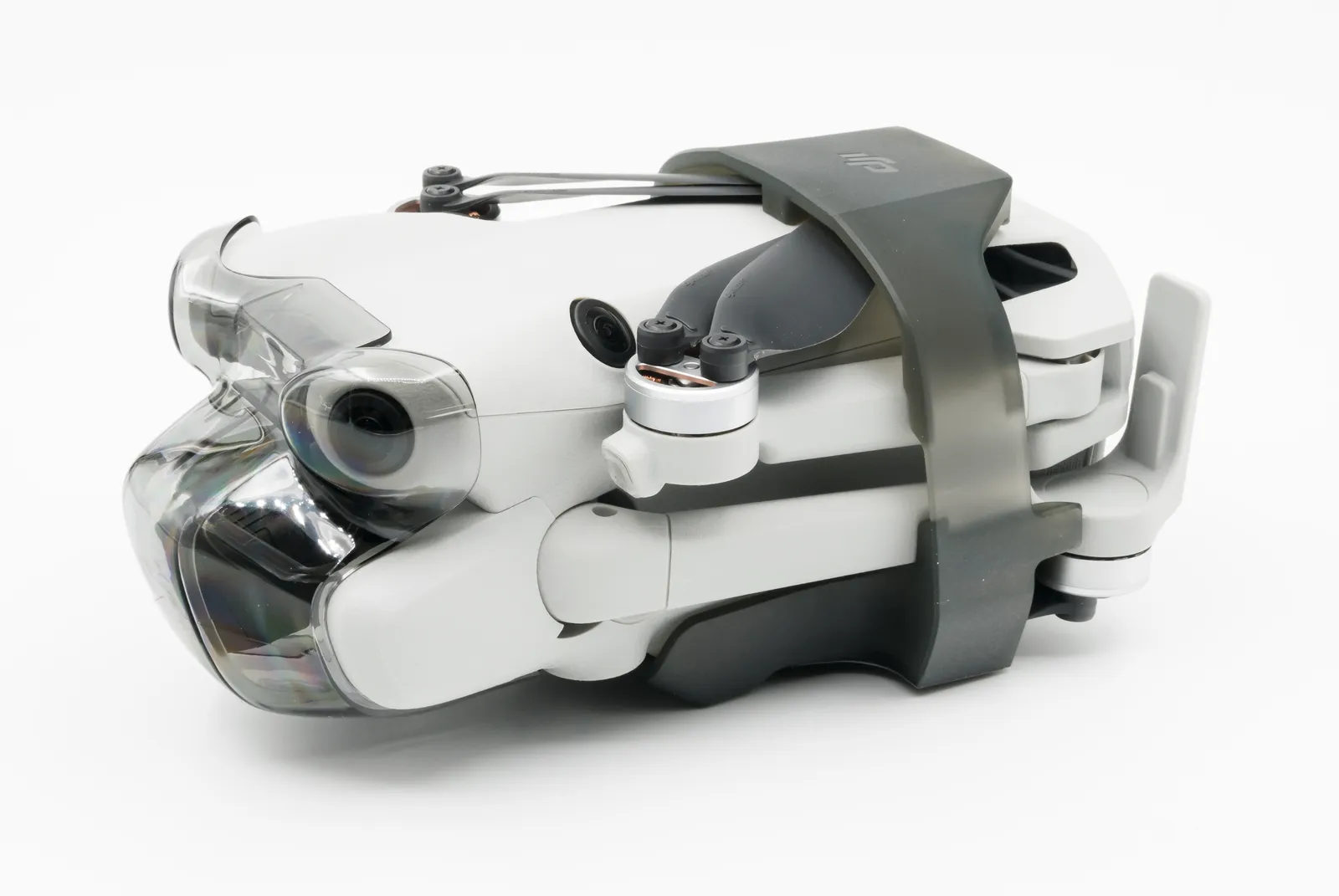
Packing the drone properly
- Fold the arms. DJI recommends transporting the drone switched off with the arms folded, and the controller with the antennas folded.
- Protect the gimbal. Fit the protective cover when the drone is not in use. The camera is the most delicate part.
- Do not squash the propellers. According to DJI, the propellers should not be squashed or bent during transport.
- No loose batteries. Put each battery in its compartment or protect the terminals so nothing can short-circuit.
Taking the backpack on a plane
For air travel, a backpack is ideal because batteries have to go in your hand luggage anyway. According to the Federal Aviation Office (Luftfahrt-Bundesamt, LBA):
| What | Hand luggage | Checked baggage |
|---|---|---|
| Spare batteries up to 100 Wh | allowed | prohibited |
| Spare batteries 100 to 160 Wh | only with airline approval, max. 2 | prohibited |
| Device with battery fitted | allowed, completely switched off | only switched off and secured against switching on |
Every spare battery must be protected against short circuits, for example with insulated terminals. Airlines may be stricter. All details on watt-hours and packaging are under Drone on a plane. Which drones fit especially well in travel luggage is shown on the travel drone page.
Frequently asked questions
Do I even need a backpack for a mini drone?
Not necessarily. A mini drone with controller and three batteries fits in a small shoulder bag. A backpack is worth it if you have other luggage with you.
Can I use a normal camera backpack?
Yes, if the dividers are flexible. Many camera backpacks have adjustable compartments that also fit a drone, controller and batteries.
Where is the best place for batteries in the backpack?
In a fireproof battery bag, separate from the drone. Longer storage at home has its own rules, see Drone battery.
Sources
- Luftfahrt-Bundesamt: Elektronische Geräte mit Lithium-Batterien im Passagiergepäck (electronic devices with lithium batteries in passenger baggage), retrieved on 12 November 2026
- DJI: Mini 5 Pro – User Manual v1.0 (PDF, English; transport and storage), retrieved on 12 November 2026