Buying advice
Travel drone: Which drone fits in your holiday luggage?
Updated on 7 min read
Written with AI: This text was written with the help of artificial intelligence. Technical data and legal information are based on the linked manufacturer and authority sources. Learn more
AdvertisingThis page contains affiliate links (marked with *). If you buy through them, we earn a commission. The price stays the same for you. As an Amazon Associate we earn from qualifying purchases. How we make money
All models at a glance
DJI Mini 5 Pro
- Weight
- 249.9 g
- EU class
- C0
- Flight time
- 36 min
- Range
- 10 km
- Sensor
- 1″ CMOS
- Video
- 4K/120fps
Price at the retailerView on Amazon*DJI Mini 4 Pro
- Weight
- ~249 g
- EU class
- C0
- Flight time
- 34 min
- Range
- 10 km
- Sensor
- 1/1.3″ CMOS
- Video
- 4K/100fps
Price at the retailerView on Amazon*DJI Neo 2
- Weight
- 151 g
- EU class
- C0
- Flight time
- 19 min
- Range
- 6 km
- Sensor
- 1/2″
- Video
- 4K/100fps
Price at the retailerView on Amazon*DJI Flip
- Weight
- ~249 g
- EU class
- C0
- Flight time
- 31 min
- Range
- 8 km
- Sensor
- 1/1.3″
- Video
- 4K/100fps
Price at the retailerView on Amazon*
| Spec | DJI Mini 5 Pro | DJI Mini 4 Pro | DJI Neo 2 | DJI Flip |
|---|---|---|---|---|
| Weight | 249.9 g | ~249 g | 151 g | ~249 g |
| EU class | C0 | C0 | C0 | C0 |
| Flight time | 36 min | 34 min | 19 min | 31 min |
| Range | 10 km | 10 km | 6 km | 8 km |
| Sensor | 1″ CMOS | 1/1.3″ CMOS | 1/2″ | 1/1.3″ |
| Video | 4K/120fps | 4K/100fps | 4K/100fps | 4K/100fps |
| Price | at the retailer | at the retailer | at the retailer | at the retailer |
| View on Amazon* | View on Amazon* | View on Amazon* | View on Amazon* |
Technical data according to manufacturer specifications (as of 11/11/2026). Values marked with ~ are uncertain. We have not tested these devices ourselves unless stated otherwise.
Quick verdict
When travelling, three things count: low weight, small packed size and batteries that are allowed in hand luggage. All four models in this comparison weigh under 250 g, are class C0 and have batteries between 11.5 and 22.3 Wh. The difference lies in camera, flight time and wind resistance. Still unsure? The drone finder narrows down the choice with 5 questions.
We have not flown the drones ourselves. All values come from DJI’s spec sheets, linked under sources.
The models compared
| Feature | DJI Mini 5 Pro | DJI Mini 4 Pro | DJI Neo 2 | DJI Flip |
|---|---|---|---|---|
| Weight | 249.9 g | under 249 g | 151 g | under 249 g |
| Packed size (L × W × H) | 157 × 95 × 68 mm (folded) | 148 × 94 × 64 mm (folded) | 147 × 171 × 41 mm (with propeller guards) | 136 × 62 × 165 mm (folded) |
| Battery | 19.52 Wh | 18.96 Wh | 11.5 Wh | 22.3 Wh |
| Flight time | 36 min | 34 min | approx. 19 min | 31 min |
| Max. wind resistance | 12 m/s | 10.7 m/s | 10.7 m/s | 10.7 m/s |
| Sensor | 1-inch | 1/1.3-inch | 1/2-inch | 1/1.3-inch |
| EU class | C0 (with standard battery) | C0 | C0 | C0 |
The models in detail
DJI Mini 5 Pro: the best travel camera under 250 g
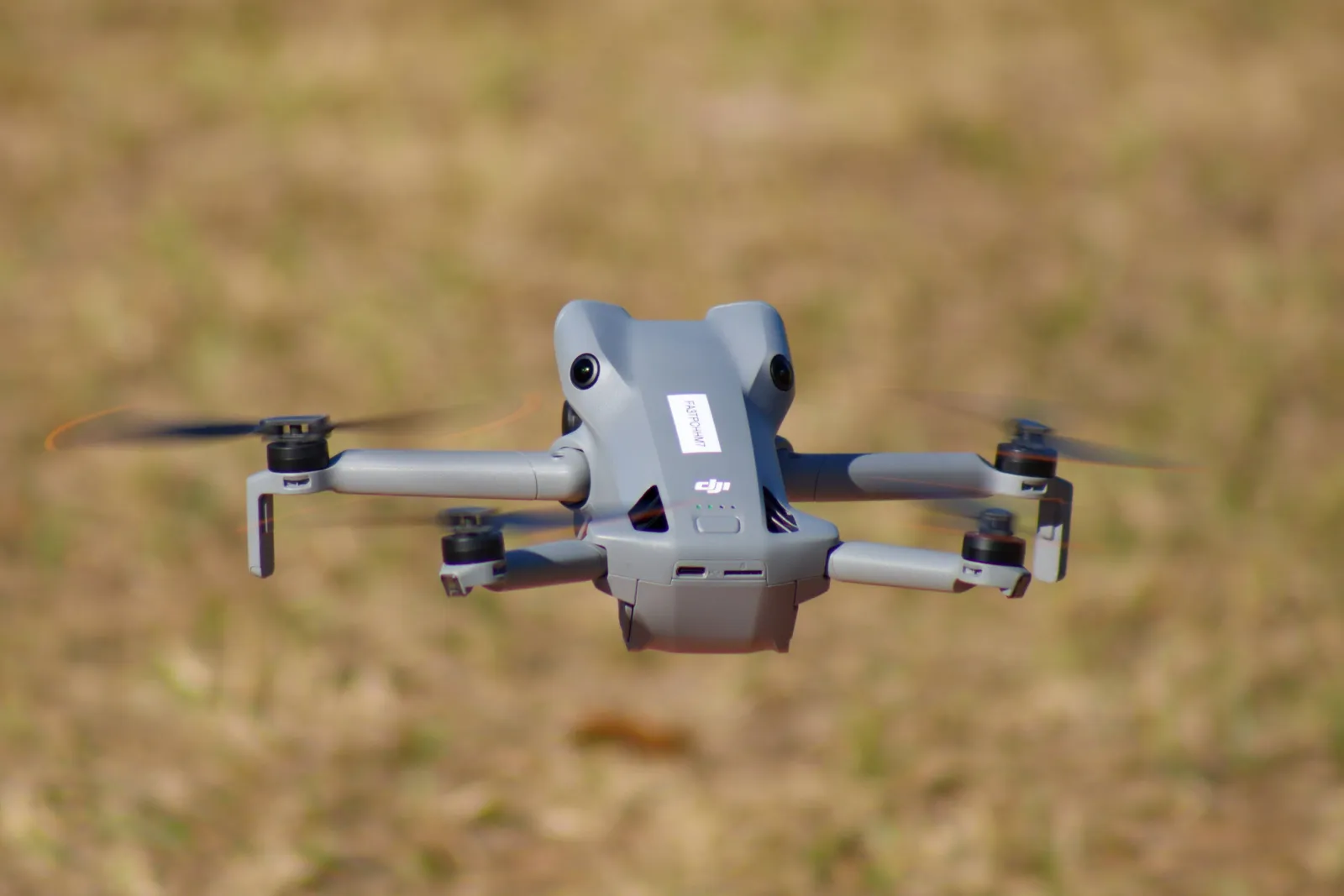
For landscapes, coastlines and mountains, the Mini 5 Pro is the strongest choice on this list. It has a 1-inch sensor with 50 MP and films in 4K at up to 120 fps. At 12 m/s, it withstands the most wind according to DJI, which helps on the coast and in the mountains. Folded, it measures 157 × 95 × 68 mm.
Careful with the bundle: with the Plus battery (33.51 Wh) from the Fly More Combo Plus, it is a C1 drone. Then you need the A1/A3 drone licence. For the plane, even the Plus battery is not a problem, as it is well below 100 Wh.
- Pros: best image quality, highest wind resistance, long flight time
- Cons: no longer C0 with the Plus battery
- Who it’s for: travellers for whom landscape shots matter
- Don’t buy if: you mainly take selfie clips in the city
View DJI Mini 5 Pro on Amazon*
DJI Mini 4 Pro: the proven alternative
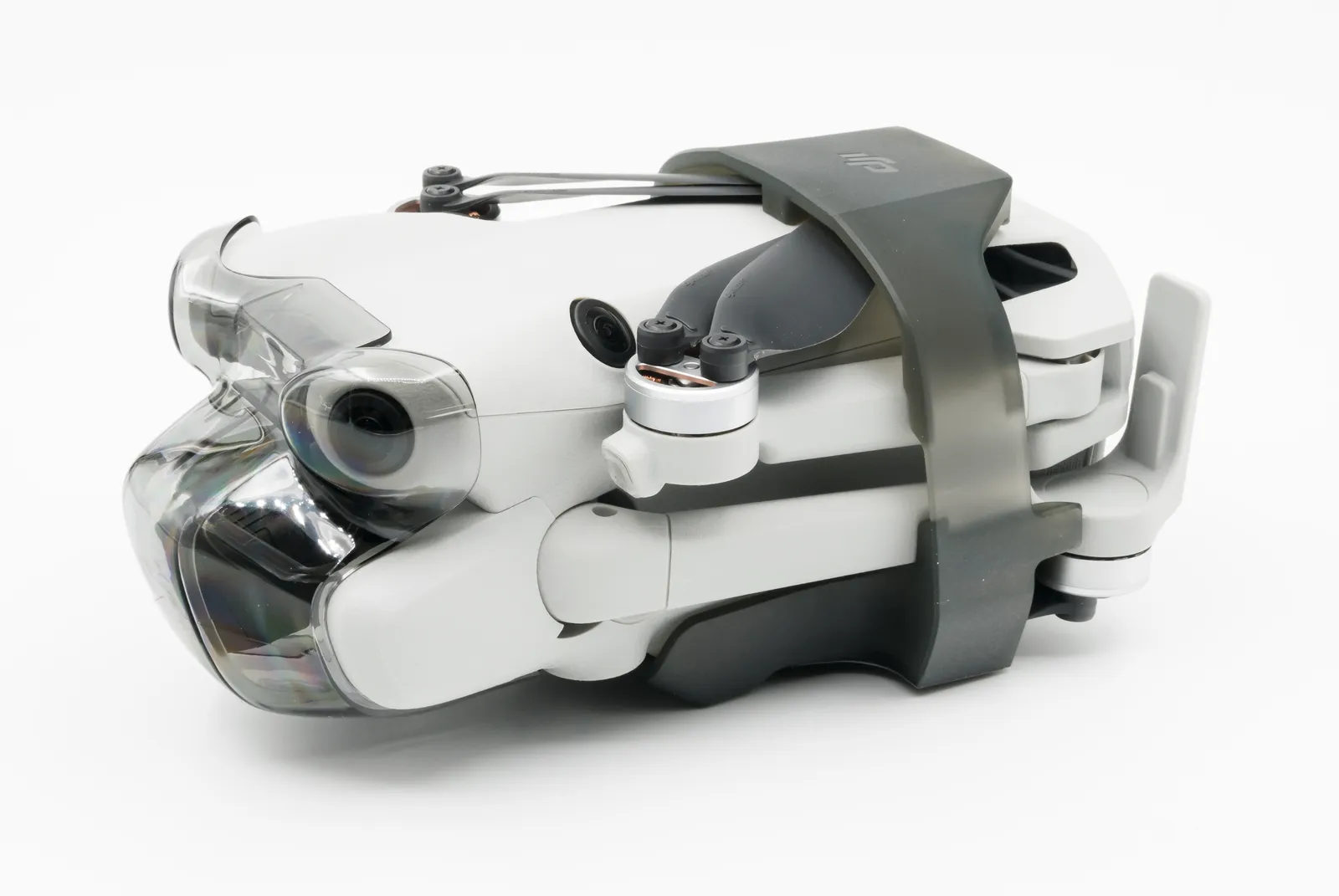
Folded, the Mini 4 Pro measures 148 × 94 × 64 mm, slightly smaller than the Mini 5 Pro. According to DJI it flies for 34 minutes, films 4K at up to 100 fps and senses obstacles in all directions. According to the spec sheet, DJI does not sell the larger Plus battery in Europe, so here it stays C0.
- Pros: compact packed size, omnidirectional obstacle sensing, long flight time
- Cons: smaller sensor and slightly less wind resistance than the Mini 5 Pro
- Who it’s for: travellers who want a full camera drone and can do without the 1-inch sensor
- Don’t buy if: the price difference to the Mini 5 Pro is small, see Mini 4 Pro vs. Mini 5 Pro
View DJI Mini 4 Pro on Amazon*
DJI Neo 2: for city trips and selfies
At 151 g, the Neo 2 is the lightest drone here. At 41 mm high it is very flat, but at 147 × 171 mm it is wider than the folded Mini models. The battery has only 11.5 Wh. It takes off from your hand and, according to DJI, follows you even without a remote controller.
It is less suitable for landscapes on your travels: at 1/2 inch the sensor is small, and the flight time is about 19 minutes, about 17 with propeller guards.
- Pros: very light, flat, smallest battery
- Cons: short flight time, small sensor
- Who it’s for: city trips, hikes and selfie videos on the go
- Don’t buy if: you want to take wide landscape shots
DJI Flip: for family holidays
The Flip has foldable full propeller guards and takes off from your hand. Folded, it measures 136 × 62 × 165 mm. It is narrow but taller than the Mini models. At 22.3 Wh it has the largest battery on this list, flies for 31 minutes according to DJI and still stays far below 100 Wh.
It only senses obstacles to the front and below. For flights near cliffs or between trees, the Mini models are better equipped.
- Pros: propeller guards, hand launch, 31 minutes of flight time
- Cons: no obstacle sensing to the sides and rear, tall packed size
- Who it’s for: families and anyone who films a lot close to people on the beach or at the holiday home
- Don’t buy if: you plan demanding landscape flights
What to look for in a travel drone
Weight
Under 250 g with class C0, you don’t need a drone licence in the EU. That makes travelling easier, because your registration is valid in all EU countries. Low weight also saves space in your hand luggage, where your camera and laptop often go too.
Packed size
Don’t just look at the weight but at the dimensions when packed. Foldable Mini drones are flat and long, the Flip is narrow and tall, and the Neo 2 is very flat but wide. Then there are the remote controller, charger and spare batteries. A suitable drone backpack or a bag from the Fly More Combo keeps everything together.
Batteries on the plane
Spare batteries always go in your hand luggage. You may take batteries up to 100 Wh without approval. According to DJI, all batteries in this comparison are between 11.5 and 33.51 Wh (including the Plus battery of the Mini 5 Pro). How to pack them and what airlines may additionally require is explained under Taking a drone on a plane.
Wind and weather
On coasts and in the mountains there is often more wind than in the lowlands. Check the maximum wind resistance in the spec sheet. According to DJI, the Mini 5 Pro manages 12 m/s and the other three models 10.7 m/s. If in doubt, stay on the ground.
Rules abroad
Every country has its own rules, geo-zones and sometimes bans. Within the EU, your registration and your certificate of competency are valid, outside the EU often not. What to check before your trip is explained under Drone on holiday.
Overview
| Criterion | What to look for |
|---|---|
| Weight | under 250 g and C0, careful with Plus batteries |
| Packed size | folded dimensions, space for accessories |
| Battery | Wh rating under 100 Wh, spare batteries in hand luggage |
| Wind resistance | important on the coast and in the mountains |
| Image quality | larger sensor for landscapes and dusk |
| Destination | check the rules before you leave |
Frequently asked questions
Can I take the drone in my hand luggage?
Yes, that is actually the best solution. Spare batteries must go in your hand luggage, and the drone with the battery inserted may go there too. Details under Drone on a plane.
How many spare batteries make sense?
That depends on your plans. Calculate with the flight time from the spec sheet and plan a reserve, because wind and cold drain the battery faster. With the Neo 2 at about 19 minutes, you are likely to need more batteries than with the Mini models. For batteries under 100 Wh, the dangerous goods rules set no fixed maximum number, but airlines can set a limit.
Do I need different insurance abroad?
Check whether your liability insurance also applies abroad. What your destination country requires is explained under Drone on holiday.
Which other drones under 250 g are there?
You can find the general comparison under Drone under 250 g.
Sources
- DJI: Mini 5 Pro – Technische Daten (weight, dimensions, battery, wind resistance), retrieved on 12 November 2026
- DJI: Mini 4 Pro – Technische Daten (weight, dimensions, battery, wind resistance), retrieved on 12 November 2026
- DJI: Neo 2 – Technische Daten (weight, dimensions, battery, wind resistance), retrieved on 12 November 2026
- DJI: Flip – Technische Daten (weight, dimensions, battery, wind resistance), retrieved on 12 November 2026